
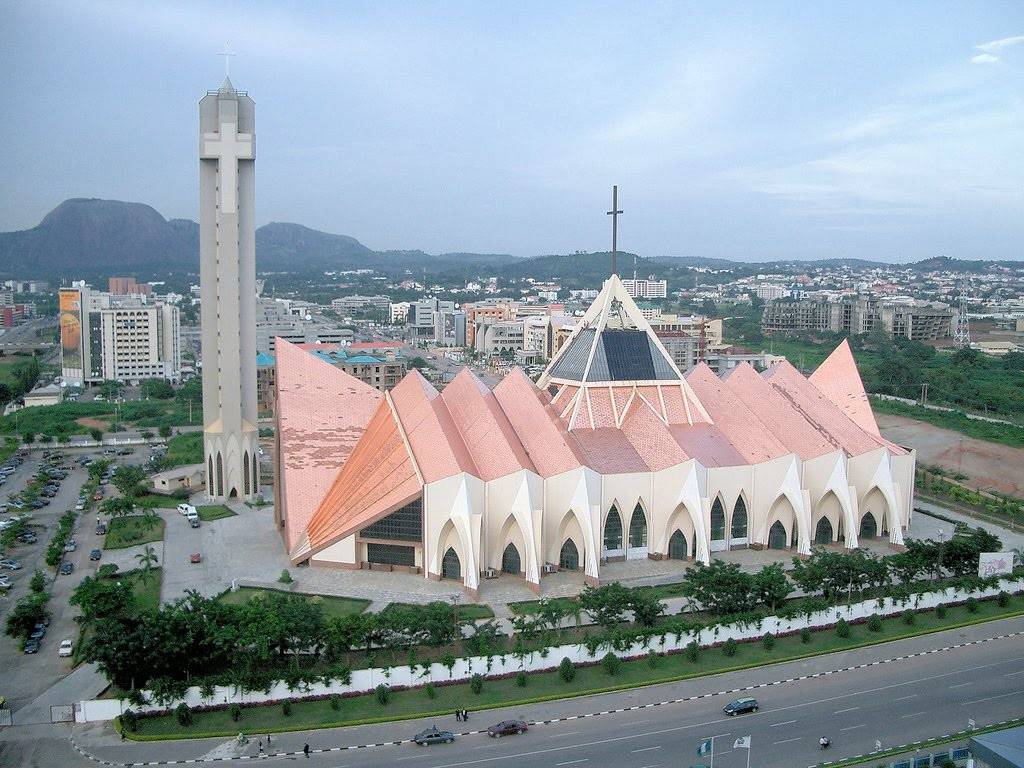
Background and Architectural Design
Serving as the primary place of worship for Nigeria’s Christian community, the National Christian Centre (formerly known as the National Ecumenical Centre) is a triumph of modern neo-gothic architecture. Designed by the Nigerian architectural firm Darchiwork Group, the cathedral is characterized by its dramatic, sweeping lines. The most striking exterior feature is the folded, pitched copper roof which, over time, has developed a distinct patina. Inside, the massive nave is illuminated by a series of spectacular, vibrant stained-glass windows in vibrant reds, greens, and yellows that project a kaleidoscope of colors across the pews on sunny days.
History and Construction
The history of the Centre is a story of perseverance. The project was initiated in 1989 to create a central interdenominational church for the newly established capital, acting as the Christian counterpart to the National Mosque. However, the construction faced numerous hurdles, funding shortages, and political shifts, leaving the structure dormant for over a decade. It sat as an unfinished concrete shell on the Abuja skyline for years.
In 2004, a renewed national effort was launched by the Christian Association of Nigeria (CAN), led by then-President Olusegun Obasanjo, to raise the necessary funds for its completion. The intensive final phase of construction was executed rapidly, and the Centre was officially dedicated on October 2, 2005, perfectly timed to coincide with the celebration of Nigeria’s 45th Independence anniversary.
The Visitor Experience
The Centre is open to the public and is a popular destination for tourists interested in architecture and religious history. Visitors are highly encouraged to visit during daylight hours when the stained-glass windows are at their most brilliant. The cathedral also features an impressive, monumental pipe organ—one of the largest in West Africa—which provides a breathtaking acoustic experience during choir rehearsals and Sunday services. Guided tours are available, offering insights into the complex engineering of the roof and the symbolism embedded in the window panels.
Looking for a comfortable base for your visit?
Plan your stay at Chrisvirgy