
Background and Geology
Aso Rock is to Abuja what Table Mountain is to Cape Town—the defining geological feature that orientates the entire city. Measuring approximately 400 meters above sea level, this granitic monolith towers over the capital. Its name is derived from the indigenous Asokoro people, where “Aso” translates to “victorious.”
History and Political Integration
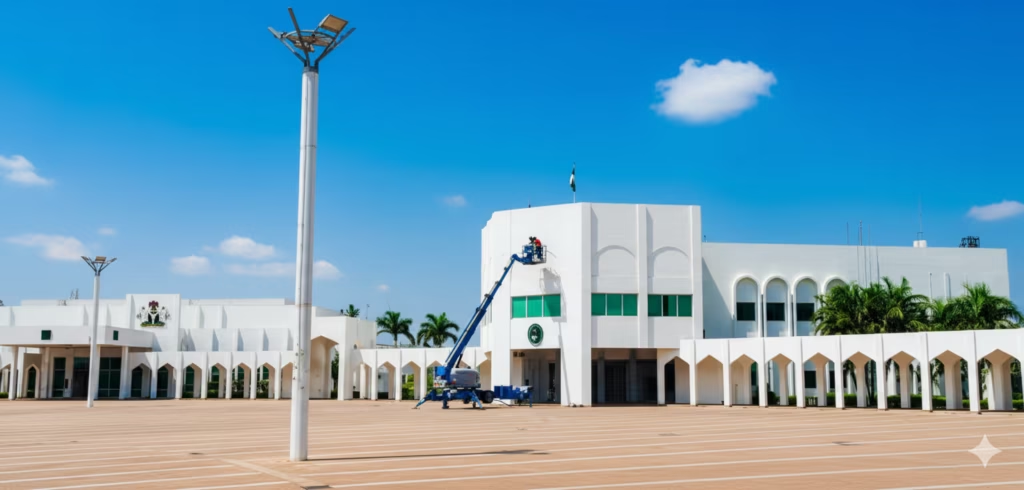
Historically, the sheer cliffs of the rock provided an impregnable natural defense for the Asokoro people during ancient conflicts, earning its “victorious” moniker. The rock was considered highly sacred, surrounded by spiritual groves where local priests performed vital ceremonies. When Abuja was designed in the late 1970s and 80s, the planners chose to harness the physical and psychological weight of the rock. They built the Aso Presidential Villa—the official residence and office of the President of Nigeria—directly into the valley at its base. The rock essentially serves as a massive, natural security wall for the complex, while simultaneously projecting an image of unshakeable strength for the presidency.
The Visitor Experience
Because the rock directly overlooks the Presidential Villa and various military installations, public access to climb Aso Rock is strictly prohibited for security reasons. However, it remains a magnificent landmark that can be viewed from almost anywhere in the city. The most stunning, unobstructed views of the rock can be enjoyed from the elevated residential streets of the Asokoro and Maitama districts, especially at sunset when the granite turns a deep, bruised purple.
Looking for a comfortable base for your visit?
Plan your stay at Chrisvirgy